Argumentative Fallacies
.... we love to use. All rights reserved, 2026.

Twenty argumentative fallacies! Most of you know these but they are good to review from time to time. Some of these come from T. David Gordon’s “Specious Arguments” found on his old website, and I added in a few others. There are lots more and I claim no expertise on the topic.
(Note: this was originally an old twitter thread which I recently turned into a PPT presentation for leadership training in our church. If you wish to use it, with citation, please email me, and I will try to send it as an attachment.)
~~~~~
Ad Hominem — attacking the person, rather than the idea. Exception: when the facts of a case must first be established, a person’s trustworthiness is fair game. But that is still not the same as engaging the argument itself.
~~~~~
Fallacy of the Beard — failing to make distinctions between altogether different items, simply because they bear some resemblance to one another.
~~~~~

The Excluded Middle (false dichotomy) — disallowing a nuanced position between two extremes in order to discredit one side.
~~~~~
Argument to Moderation (argumentum ad temperantiam) — the opposite of the above, this is the assumption that the compromise position is always most correct. I can tend towards this one.
~~~~~
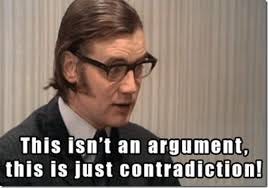
Equivocation — changing definitions to suit one’s own cause.
~~~~~
False Generalization — generalizing in such a way as to disallow exceptions or careful examination.
~~~~~
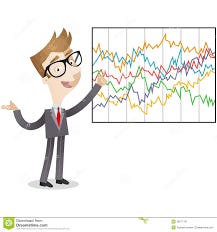
Statistical Fallacies — failing to interpret statistics accurately or cherry picking results.
~~~~~

Fallacy of the Expert (appeal to authority) — that a qualified person must be correct on a given subject in their field simply because it is their field. Note: in my opinion, we are too prone to trust impulse rather than careful study but that does not mean experts are always correct.
~~~~~
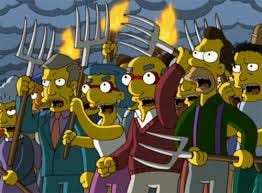
Fallacy of the People (ad populum) — something must be true, because the majority of people thinks it is so.
~~~~~
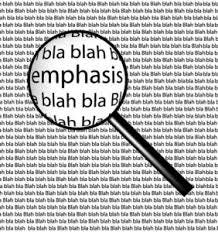
Emphasis Fallacy — to argue against a movement simply because it emphasizes a particular matter or not.
~~~~~
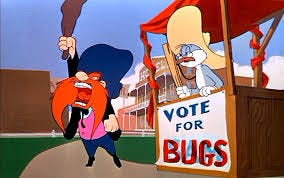
Appeal to Force (ad manum or ad baculum) — the explicit or subtle threat of consequences to be suffered unless one simply agrees or submits.
~~~~~
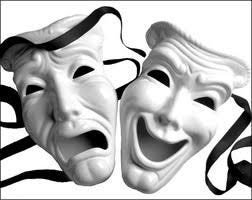
Appeal to Emotion (or Pity) — seeking to assert something’s truthfulness simply by its impact upon our sentiments, rather than establishment in fact.
~~~~~

Genetic Fallacy — that the origins of an idea makes it automatically suspect (or commendable) in and of itself, regardless of its current merits.
~~~~~

Slippery Slope (Camels’ nose) — that one thing must lead to another as a matter of course.
~~~~~
Argument from Silence —
~~~~~
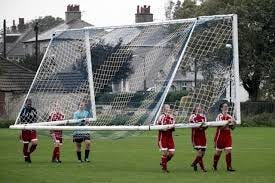
Moving the Goalposts — changing the standard of required evidence in mid-argument.
~~~~~
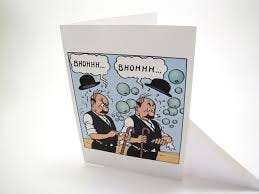
Proof by assertion (argumentum ad nauseam) — argument by repetition rather than by demonstration. This is also related to gaslighting — attempting to cause people to doubt their own common sense observations.
~~~~~

Begging the question (petitio principii) — asserting the conclusion in the question itself (ex: “When did you stop beating your wife?”). Also related to circular reasoning.
~~~~~

If-By-Whiskey — my personal favorite, dating to a political speech from the 1950s, this argument changes positions depending on the definition of one’s audience (”If by whiskey, you mean the devil’s brew, I’m against it; if by whiskey, you mean refined libation, I am for it.”).
~~~~~
The Gish Gallop — overwhelming an opponent by providing an excessive number of arguments with no regard for their accuracy or strength.
~~~~~

THE END. Now you will never make an argumentative fallacy again.
~ C.A. Hutchinson, all rights reserved, 2026.
Chris, this is great! I'm going to use it in my college freshman composition course in a couple weeks. :)