Pneumatology Pmatters
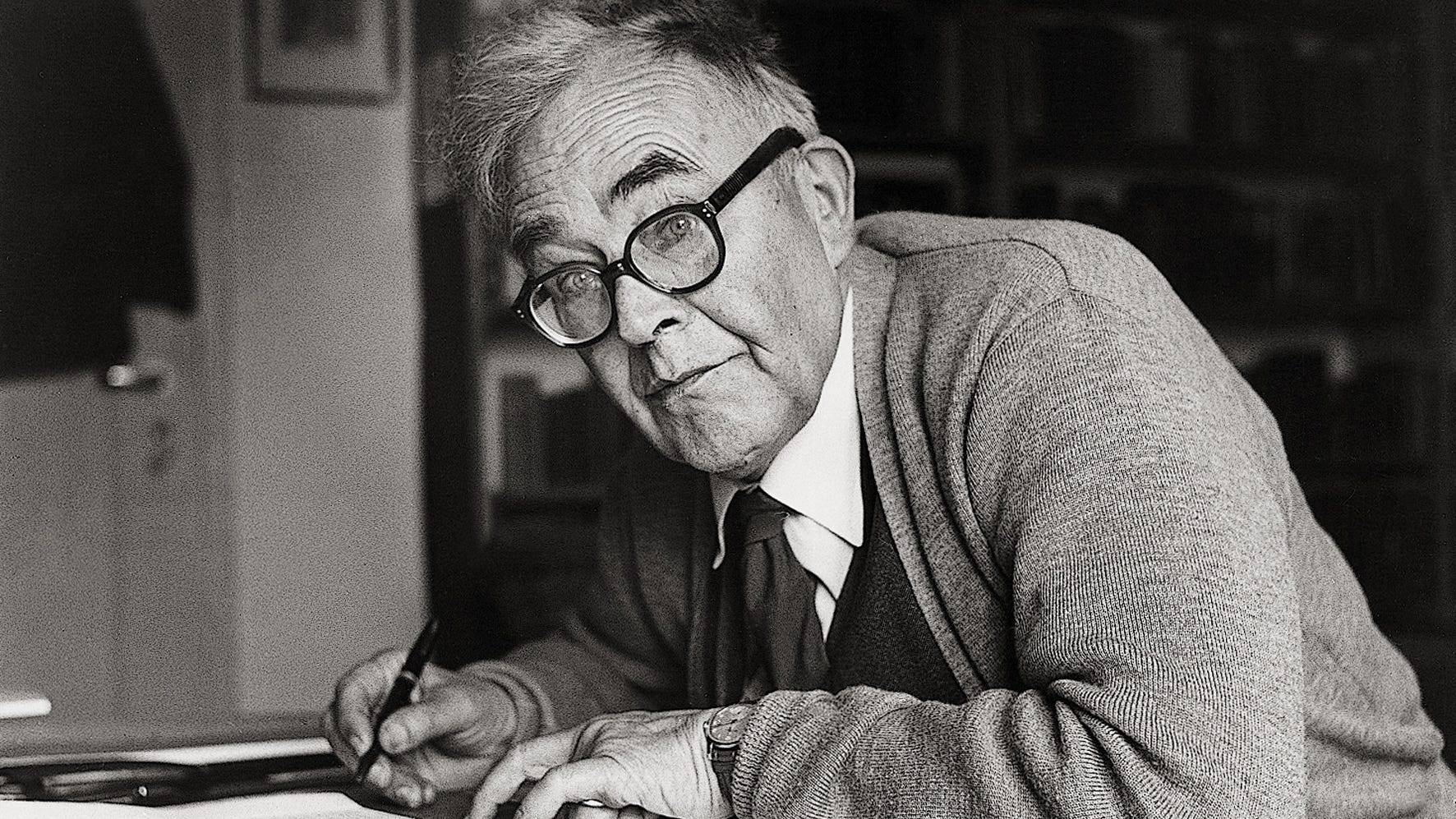
Karl Barth's Imbalanced Theology of the Holy Spirit

Author’s note: once upon a time, I was not too bad a scholar, though hardly an expert in anything. I am posting this old essay on Barth for a couple of reasons. First, one of these days, my 3.25” floppy disks are going to give out and there may be a few things worth preserving. I love doing Google searches and discovering some essay by obscure folks who perhaps went against the zeitgeist of their time. Second, if there is a theological error I might be prone to fall into, it may well be some form of Barthianism. There are worse things for sure, but I wanted to review what I had already concluded to remind myself of truths to which I am pledged. Forgive the whimsical title, but silent P’s have always fascinated me, ever since Thompson of Thomson and Thompson explained that he was the “Thompson with a P, as in Psychology.”
~~~~~
The Divine Courier:
Karl Barth’s Imbalanced Theology as Demonstrated
in his Doctrine of the Holy Spirit
Christopher A. Hutchinson
Fall, 1992
I. Introduction
The hallmark of Karl Barth’s (1886-1968) theology is his insistence that salvation was objectively and completely achieved for all men by the incarnation and work of Jesus Christ. Given this Christocentric emphasis, the question needs be raised as to what role the Holy Spirit plays in Barth’s theology of salvation, and whether this role is in accord with Christian orthodoxy. That is, if God the Son accomplished all that was necessary for men’s salvation so that an individual’s religious experience is inconsequential, what role is left for the Holy Spirit and faith to play?
This essay will attempt to answer that question as well as to suggest what impact Barth’s doctrine of the Holy Spirit has had upon the church. It is recognized that Barth went through some significant changes in his theology, particularly in his later years. His later theology of the Holy Spirit in particular would have been clarified if, before he died, he had been able to finish volume V of his massive Church Dogmatics, which was to have dealt with the Holy Spirit’s part in redemption.[1] Nonetheless, the impact that even the “early” Barth has had upon the church is so extensive that every aspect of his teaching must be scrutinized and called to account where lacking.
We will organize this paper around four questions which we will attempt to answer in turn. We begin by examining Barth’s doctrine of the Holy Spirit in the essential Trinity, which we conclude to be fundamentally orthodox. We then move into the heart of our argument by exploring Barth’s doctrine of the Holy Spirit in the economic Trinity, and discover that Barth ascribes an inadequate role to the Holy Spirit in men’s salvation, thus revealing a grave deficiency in Barth’s theology.[2]
This leads us into examining his anthropology which winds down our argument by revealing further flaws in Barth’s thought, particularly in his overlooking the role of the human will in salvation. And finally by way of conclusion, we will suggest some possible effects Barth’s imbalanced theology has had upon the church, namely tendencies toward unitarianism, formalism, and what we shall call relativistic rationalism.
II. Barth and the Holy Spirit of the Essential Trinity
If doubts are raised about Barth’s theology of the Holy Spirit, the logical place to begin examining it is with Barth’s doctrine of the essential Trinity. Because of Barth’s extreme Christocentric thought and unconventional language, some have questioned his orthodoxy regarding this crucial doctrine. This is made all the more ironic by the fact that Barth begins his theology with the Trinity and has perhaps said more about God’s triunity than any other theologian of the 20th century. Perhaps it is precisely this explicitness regarding such a complex doctrine that causes Barth this unfriendly scrutiny.
Cornelius Van Til accuses Barth of adhering to a form of modalism by overemphasizing the unity of God at the expense of His three Persons. He writes that according to Barth,
“The persons of the Godhead are not three centers of self-consciousness. They are modes of being of the one God. Only thus, argues Barth, can we find true unity in the trinity....Thus the orthodox doctrine of three persons in the trinity would, according to Barth, lead to tritheism....This orthodox doctrine is therefore to be replaced by the idea of the unity, or essence, of God...”[3]
Later in the same document, Van Til adds that, “(Barth’s) departure from the historic doctrine of the immanent or ontological trinity is much deeper than any found in the history of the ancient church.”[4]
Robert Reymond supports Van Til’s point of view by concentrating on what he calls Barth’s “christomonistic” thought:
“Barth rejects the orthodox understanding of the Trinity, that is, that there are three Persons in the Godhead, the Father, the Son, and the Holy Spirit, and that these three are one God, the same in substance, equal in power and glory. Rather, though he rejects likewise the formulation of historic Modalism, Barth describes the three Persons as simply ‘three modes of being of the one God.’ He is adamant in his insistence that the only God man can know is the God who reveals himself in Jesus Christ....For Barth, then, God for all practical purposes is simply and solely Jesus Christ”[5]
For this reason, Reymond concludes that Barth is a practical Unitarian. Is this analysis of Barth accurate?
In answering this it is well to remember that since the time of Nicea, the debate over the Trinity has always centered on the one ousia or “essence” of God versus the three hypostasis or “persons” of God. Often in the history of the church, they that do most to explain the Trinity are accused of emphasizing one aspect over and against the other. As Athanasius was accused of stressing the one essence too much, so was Jonathan Edwards 1400 years later accused of accentuating the difference between the three Persons. It is not surprising then, that in choosing to use new language, Barth should be misunderstood on the Trinity. It is true that Barth does not like to use the term “person” to describe the Holy Spirit, because the modern sense of the word differs from that of hypostasis in its modern connotation of independence.[6]
As Colin Brown puts it:
“This great stress on the unity of God, coupled with Barth’s peculiar way of speaking, could give the impression that Barth was serving up his own brand of the ancient monarchian heresy, teaching that three persons of the Trinity were merely temporary modes or manifestations of the single divine being. This impression might appear to be strengthened by Barth’s desire to substitute the term mode of being (German Seinsweise) for the traditional term person. But the impression would be superficial. The term mode of being is not intended to indicate something temporary, but rather to point to the ways in which God is both in revelation and in Himself. God does what He does and is what He is in revelation, because of what He is in Himself. The existence and nature of the economic Trinity revealed through Scripture depend upon the existence and nature of the immanent Trinity.”[7]
Barth’s frequent use of the term “mode of being” therefore should not be understood as advocating a new modalism, but rather as his attempt to maintain the unity of the Godhead while communicating the doctrine of the Trinity to the 20th century. Moreover, Barth is not opposed to referring to the Holy Spirit as a person, as long as it is made clear that He is still quite unified with the Father and the Son.[8]
How then does Barth view the place of the Holy Spirit in the essential Trinity? He sees the Holy Spirit as the eternal love that the Father and the Son have for one another and Who in fact binds them together. In Barth’s words:
“If we wanted to give a material description of the Holy Spirit, we must say he is the Spirit of love. And we might also step into the theology of the Trinity and show that the Holy Spirit is, already in God Himself, the bond between the Father and the Son, at the same time the means and the expression of their love.”[9]
Compare this to Jonathan Edwards’ explanation of the Holy Spirit in the essential Trinity:
“The Holy Spirit is the act of God between the Father and the Son, infinitely loving and delighting in each other. Sure I am that, if the Father and the Son do infinitely delight in each other, there must be an infinitely pure and perfect act between them,....distinct from each of the other two, and yet it is God.[10]
It is therefore seen that Barth’s formulation of the Holy Spirit’s role within the Godhead is in accord with Western Christian orthodoxy insofar that Edwards may represent it. It is not surprising then that Barth takes a keen interest in defending the filioque since the Anselmian concept of the Spirit’s dual procession figures prominently in his doctrine of the Trinity.[11]
We conclude therefore that Barth is fundamentally orthodox in his formulation of the essential Trinity and the role of the Holy Spirit therein. Barth not only is orthodox in this regard; he has reintroduced the doctrine of the Trinity to the 20th century in a way that no one yet has matched.
III. Barth and the Holy Spirit of the Economic Trinity
Having examined Barth’s theology of the Holy Spirit in the essential Trinity, we now turn to his thought regarding the economic Trinity. It is with the economic Trinity in fact that Barth begins since in his view it is only in God’s saving revelation to us that we know that God is Triune. So we find this doctrine in Barth very well developed. He follows in the Reformed vein in his emphasis that God does everything in men’s salvation for His own glory and by grace alone, perhaps best summarized in the verse,
“For from Him, and through Him, and to Him are all things. To Him be the glory forever. Amen.” (Romans 11:36).
Barth states salvation in these terms: “...man as he is, in his creaturely existence as man and as an individual, is opened, prepared and made fit by God for God.”[12]
Put in his typical Christological form, Barth writes,
“...when we ask how a man comes to hear the Word of God, to believe in Christ,...we must say that...the Word creates the fact that we hear the Word. Jesus Christ creates the fact that we believe in Jesus Christ.”[13]
If all is through Christ, then is there a role at all for the Holy Spirit? Yes, because the Holy Spirit “is the Spirit of Jesus Christ.”[14] Therefore,
“We are not concerned in the Holy Spirit with something different from Him (Jesus Christ) and new. It was always an erroneous conception of the Holy Spirit, that so understood Him. The Holy Spirit is the Spirit of Jesus Christ. ‘Of mine He shall take and give to you.’ The Holy Spirit is nothing else than a certain relation of the Word to man.”[15]
Consequently, when Christ works in a man, He does so through the Holy Spirit: “...the hearing of the Word of God the Creator, which makes human life to become Christian life, is not man’s work, but God’s: the Holy Ghost’s work.”[16] So it is the role then of the Holy Spirit to communicate the work of Christ to the individual.
It is for this reason that Barth identifies Christ with God’s objective revelation to man, and the Holy Spirit with God’s subjective revelation to man. He is insistent, however, that the Holy Spirit’s revelation or activity in men be understood not as something independent from the Son’s objective revelation and salvation, but rather only as the announcement to the individual, as it were, of what Christ has already accomplished.
The following is an excellent summary of a theme found throughout Barth’s writings:
“Subjective revelation can consist only in the fact that objective revelation, the one truth which cannot be added to or bypassed, comes to man and is recognized and acknowledged by man. And that is the work of the Holy Spirit. About that work there is nothing specific that we can say. We can speak about it only by sheer repetition, that is, by repeating what is told us objectively, that ‘God was in Christ reconciling the world unto Himself.’ The work of the Holy Spirit is that our blind eyes are opened and that thankfully and in thankful self-surrender we recognize and acknowledge that it is so: Amen. Therefore we cannot say anything else about this work, we cannot speak about it in any other way than by repeating over and over the Amen which has been put into our mouths by this work. Here, too, we must remember that the Holy Spirit is the Spirit of the Father and also of the Son. He is not a Spirit side by side with the Word. He is the Spirit of the Word itself who brings to our ears the Word and nothing but the Word. Subjective revelation can only be the repetition, the impress, the sealing of objective revelation upon us; or, from our point of view, our own discovery, acknowledgment and affirmation of it.”[17]
Here we see the heart of the matter. Since everything needed for an individual’s salvation has already been accomplished in Christ, the Holy Spirit’s role is essentially secondary - there is nothing creative which the Holy Spirit can add to Christ’s work. According to Barth, “there is nothing specific that we can say” about it but the “sheer repetition” of Christ’s work. The Holy Spirit opens our eyes and our ears to the objective salvation already affected by Christ, but nothing more.
As William Anderson points out,
“The subjective element in this experience between God and man, i.e., in God’s self-unveiling, is at the very most a noetic experience, an experience which is definitely subordinate to the objective event of God’s revelation....For Barth holds that man has not the capacity to respond to this act but must first receive all capacity....Therefore, in the last analysis, man’s role in the God, man, revelation structure is basically unimportant, and the response that he makes, from his point of view, is really a shallow and empty response.”[18]
If the Holy Spirit only makes it possible for men to know that they are saved in Christ, what then becomes of the role of faith? In the words of Donald Bloesch,
“...in the Barthian scheme Jesus Christ is the ontic dimension and faith the noetic dimension of salvation. In Jesus Christ the fullness of the reality of salvation was achieved for men, and the Holy Spirit is the means by which men apprehended this reality. The cross of Christ is the redemptive event, and faith is the perception of this event.”[19]
Bloesch concludes that, “We are justified by faith alone (sola fide) in the sense that only in faith can we perceive and apprehend our justification and the justification of all people accomplished in Jesus Christ.”[20]
In the same way as faith, so are all the subjective elements of an individual’s salvation subsumed along with the objective elements into Christ’s work. In Bloesch’s words:
“Election, conversion, reconciliation, and redemption are all aspects of the eternal decision of Jesus Christ to identify and unite himself with fallen humanity. Justification and sanctification are not two separate divine actions but facets of the event of reconciliation, though he does not identify them. Faith is simply the subjective response to the one event of salvation, which encompasses election, reconciliation, calling, conversion, etc.”[21]
Barth even goes so far as to say that, “In His (Christ’s) death there took place the regeneration and conversion of man.”[22] Conversion takes place in the subjective sphere “only as a correspondence to what happened to man in the objective sphere.”[23] An individual’s sanctification is likewise merely an aspect of Christ’s accomplishment so its primary role therefore is to bear witness to others of Christ’s all-inclusive saving work:
“...Barth speaks much of sanctification. Yet sanctification is not a divine process within man by which man is transfigured in the image of Christ; rather it is a divine act by which all men have been changed in Jesus Christ....It is incumbent upon those who believe to reflect and manifest the objective work of sanctification in their lives.”[24]
The fact that Barth ascribes to the Son an element of salvation traditionally credited to the Holy Spirit only serves to underscore his extreme objectivism.
Given Barth’s view then of the secondary role of the Holy Spirit in men’s salvation, and of faith as primarily “acknowledgment” of the objective work already accomplished by Christ, it can be said that an individual’s redemption is essentially equal to his noetic acquisition of revelation. Barth is very explicit on this point:
“It (faith) is an acknowledgment, a recognition and a confession. As all these terms indicate, it is a knowledge. And as the object and basis is the same in every case, so in every case it is an active knowledge. Why a knowledge? As we have seen, underlying it there is the presupposition of a creative event -- the being and activity of Jesus Christ in the power of His Holy Spirit awakening man to faith. As the event of a human act on this basis, faith is a cognitive event, the simple taking cognisance of the preceding being and work of Jesus Christ.”[25]
Gustav Wingren is critical of this aspect in Barth. Klaus Bockmuehl summarizes Wingren’s critique in his book The Unreal God of Modern Theology:
“The question of man’s justification has been replaced by the question of man’s knowledge of God. In the Bible and the Reformation the main issue was righteousness for the guilty and freedom for the imprisoned. In Barth, however, the dominant question is whether we have knowledge of God or whether there is in us no such knowledge, so that we must receive it from the outside. This shift in the central question means that faith, which originally was the reception of a new being, a new standing before God, a new obedience, and an alteration of the whole man, is now no more than a different knowledge, a new insight regarding God, an alteration in the thinking of man.”[26]
Since men’s critical lack then is not righteousness but knowledge of the objective righteousness which Christ achieved for mankind, Barth is obliged to say that,
“Even before he (a man) becomes a Christian, he is in continuity with God in Christ, but he has not yet discovered it. He realizes it only when he begins to believe....The distinction is not between redeemed and non-redeemed, but between those who realize it and those who do not.”[27]
So it is apparent that according to Barth the Holy Spirit has no need to personally apply Christ’s righteousness to individuals or to regenerate their wills in any way for everything has been done in Christ. All that the Holy Spirit does is to make men aware of the victory that Christ has already won for all men.
In Barth then, the Holy Spirit is little more than a divine courier of the good news. Before we offer our own critique, a few qualifying statements must be made. Barth did not reject altogether the importance of men’s response to the gospel or their resulting obedience. Bloesch writes:
“Barth does not succeed in doing justice to the subjective dimension of salvation or in holding both dimensions in balance. The paradox of salvation is ever again sundered in his emphasis on the objective to the detriment of the subjective....Yet Barth cannot be accused of ignoring the dimension of human response, since he is emphatic that what has already been achieved and enacted must be apprehended and acknowledged in the here and now.”[28]
Regarding Barth’s concept of faith, Bloesch writes:
“Faith for Barth is an acknowledgment of God’s act of love in Christ and obedience to its imperatives. Faith includes both cognitive and ethical dimensions, but it must not be confused with the redemptive event itself. Faith in itself is not the redemptive act of God but the awakening to the significance of this act. It is also obedience in the light of this act.”[29]
Similarly, Barth’s doctrine of sanctification also included the need for men to manifest in their lives the objective salvation Christ had wrought for them.[30]
Our contention therefore, is not that Barth altogether ignored the active role of the Holy Spirit in men, but that in subordinating it to the work of Christ, Barth is at the same time both inconsistent and harmfully imbalanced in his overall theology. As Anderson puts it:
“...while Barth attempts to give some place to the subjective side of reconciliation by including it as a part of the objective content of this event, in actuality, the subjective is absorbed in the objective, making it at the most a noetic experience, an experience which is definitely subordinate to the objective event and which is in the last analysis really quite unimportant in that it does not in the least change the reality of man’s relationship to and with God.”[31]
We conclude then that Barth’s view of the Holy Spirit’s role in the economic Trinity is not orthodox by several counts: first, God the Holy Spirit plays a subordinationist, secondary role in bringing God glory through men’s salvation; second, faith becomes merely a change in one’s knowledge or, which is the same thing, the Holy Spirit’s application of redemption to individuals is reduced to personal revelation; finally, the role of sanctification whereby men may actively glorify God through the work of the Holy Spirit within them is also stripped away by Barth and allotted to the work of Christ. Much of this imbalance stems from Barth’s faulty anthropology which we will examine shortly, but our present concern is with the precise work of the Holy Spirit.
How would Christian orthodoxy respond to the above problems in Barth’s pneumatology? First of all, it would agree with Barth that salvation is by grace alone, and for God’s glory alone. Orthodoxy also agrees that Christ’s death and resurrection accomplished the effectual, objective salvation of those for whom He came to save. Finally, orthodoxy agrees with Barth that the Word and Spirit always work together and are in that regard, inseparable.[32]
However, Christian orthodoxy recognizes (as did Barth) that the Holy Spirit is as fully God as are the other two Persons of the Trinity. Therefore, orthodoxy has always understood the Holy Spirit to play a creative and primary role in salvation by being the Person Who actually and effectually applies Christ’s work to the elect.
The Holy Spirit is more than a messenger -- He sovereignly regenerates an individual’s will so that an individual will come to love the truth of the gospel and want to follow Christ. This is what orthodoxy means by the objective and subjective aspects of redemption: not only that both God the Son and God the Spirit are in concert effecting salvation in man, but that They do so in particular ways -- the Son primarily impacting man’s intellect or understanding, and the Spirit primarily transforming man’s will or affections.
Therefore, saving faith involves not only knowing the gospel, but loving the gospel, both elements of pure grace, the former primarily associated with the Son’s revelation to us, while the latter is primarily identified with the act of the Spirit upon us. And it is the latter aspect of the engagement of the Holy Spirit with man’s will that Barth has soundly neglected.
For the purpose of contrast on these points, we shall take several quotes from Edwards as one who concisely expresses the orthodox understanding of the Holy Spirit’s role in the economic Trinity.
Regarding the full equality of the Holy Spirit’s role in men’s salvation, Edwards writes,
“And each person of the Trinity is equally glorified in this work (of redemption): there is an absolute dependence of the creature on every one for all: all is of the Father, all through the Son, and all in the Holy Spirit.”[33] and “In this work every distinct person (of the Trinity) has his distinct parts and offices assigned him. Each one has his particular and distinct concern in it, agreeable to their distinct, personal properties, relations, and economical offices. The redeemed have an equal concern with and dependence upon each person, in this affair, and owe equal honour and praise to each of them.”[34]
In this way then, the Holy Spirit is equally responsible and equally honored in His saving role as are the Father and the Son. Regarding the role of the Holy Spirit as “subjective revelation” affecting the will as well as the understanding, Edwards submits that,
“The Godhead is perceived only by perceiving the Son and the Spirit, for no one hath seen God at any time; He is seen by his image, the Son, and is felt by the Holy Spirit, as fire is perceived only by its light and heat, seen by the one and felt by the other.”[35]
It follows then that if the Holy Spirit is “felt’ in some way, then faith must consist of much more than just a noetic awakening. Edwards writes,
“He that is spiritually enlightened... does not merely rationally believe that God is glorious, but he has a sense of the gloriousness of God in His heart. There is not only a rational belief that God is holy, and that holiness is a good thing, but there is a sense of the loveliness of God’s holiness....There is a difference between having a rational judgement that honey is sweet, and having a sense of its sweetness.”[36]
In these three ways, then, Barth is seen as having departed the orthodox understanding of the role of the Holy Spirit. The contrast between orthodox and Barth’s thought will be sharpened even further as we briefly examine his anthropology.
IV. Barth and the Holy Spirit in Man
Much of Barth’s inconsistent and imbalanced doctrine of the Holy Spirit and salvation can be better understood as his anthropological presuppositions are made clear. We will briefly consider three of these here: first, Barth’s low view of sin; second and consequently, Barth’s undervaluing of the importance of the human will; and lastly, Barth’s depreciating of man’s ability to actively participate in God’s bringing glory to Himself.
It may seem surprising to state that Barth had a low view of sin, given his ever present emphasis upon God’s utter transcendence and man’s complete inability to save himself or even know God. But as already mentioned, Barth saw man’s primary problem not so much as the willful disobedience to a dimly known God, but as the lack of the knowledge of God altogether.
This leads Barth to shifting the emphasis of salvation from the atoning death of Christ to the revelatory incarnation itself. As Anderson summarizes,
“When the human predicament is conceived in (terms of active evil in man), a change becomes necessary in the human condition of man, and the struggle of the death and resurrection of Christ must remain central. But Barth does not see the problem in these terms; rather he sees the problem in terms of the human situation, i.e., in man’s lack of knowledge, something which man does not possess. When viewed in this way sin becomes an “unreality”...”[37]
So it is that Barth’s rejection of all natural theology in reaction to Protestant Liberalism actually leads to a view of sin that is quite low itself, since men are not so much in rebellion as in chaos and darkness. This is further compounded by his ontology which believes sin and evil to ultimately be “unreality”. Bockmuehl concludes that Barth’s theology,
“leads him to describe sin as ‘nothingness’ and the fall of Genesis 3 as an episode that is not of ultimate seriousness. This means that there is no real doctrine of sin in his Dogmatics. Sin is what God passed by and did not choose. Evil reality is not, then, a theme for theology.”[38]
It is not hard to see then why Barth ascribes to the Holy Spirit only a noetic role in man’s salvation; men do not so much need wicked hearts to be regenerated but rather their ignorant minds to be awakened.
If Barth viewed sin primarily as “nothingness” rather than rebellion, it follows naturally that he had almost no part for the human will to play in his theology of salvation. It has already been manifoldly illustrated that to Barth the application of Christ’s objective salvation to individuals is essentially a matter of cognitive recognition. There is no concept in Barth of the human will as the primary battleground of decision which the Holy Spirit must take by force, thus causing an individual to will to believe that which had really known all along in his conscience about God, but had previously only hated and suppressed.[39]
Likewise, Barth’s theology lacks the subjective experience of God’s “sweetness” that orthodoxy attributes to the will. As Edwards puts it,
“There is a twofold knowledge of good of which God has made the mind of man capable. The first, that which is merely notional;...And the other is, that which consists in the sense of the heart;...In the former is exercised merely the speculative faculty, or the understanding, in distinction from the will or disposition of the soul. In the latter, the will, or inclination, or heart are mainly concerned,” and it is the “true sense of the divine excellency of the things of God’s word (that) doth more directly and immediately convince us of their truth;... This is a kind of intuitive and immediate evidence.”[40]
The dual role of the understanding and the will in men’s salvation is an ancient tenet of the church and so Barth’s imbalance in this area is a serious deficiency which helps explain both his severe objectivism and his disdain for “experiencing” the Holy Spirit in one’s life.
Lastly, we want to consider Barth’s low view of a Christian’s ability to bring actual, substantive glory to God through his good works. Barth was suspicious of attributing value to good works because of the constant danger of Christians seeking their justification through them. Barth even goes so far as to condemn Augustinianism as “poison and corruption” to the church, because in his view, Augustine makes “justification coincide with sanctification” in such a way that man is justified by works (even if made possible by grace). This is anathema to Barth who insists that all of salvation is from God, and that therefore works can play no part except as a witness of what has already been accomplished in Christ.[41]
Therefore, he is loath to say that human works, even as prompted by the Holy Spirit, can give any more glory to God than what has already been given through Christ’s work. Barth allows that Christians do manifest legitimate good works as a result of their being awakened to their salvation, but these seem to be essentially only for the good and joy of the Christian.[42]
This view, although seemingly harmless, again reduces the role of the Holy Spirit as a contributing Person of the Godhead, and Whose role, orthodoxy asserts, is exactly to bring the Father and Son glory through the lives of the saints. It is an awesome element of the gospel and an incredible grace that the elect are included by the Holy Spirit into the very life-stream of God’s love for, and glorifying of, Himself through the activity of the economic Trinity. To miss this is to miss an important and wonderful part of the gospel: namely, that of a real and vital relationship with God Himself, where the drama of each Christian’s day-by-day life has real and eternal consequences. Again we are indebted to Edwards:
“In efficacious grace, we are not merely passive, nor yet does God do some and we do the rest. But God does all and we do all. God produces all, and we act all. For that is what He produces: our own acts. God is the only proper author and fountain; we only are the proper actors. We are in this respect, wholly passive and wholly active.”[43]
This is not merit through works; rather it is recognition that glorifying God in our works is part of the gospel scheme. But for Barth, only Christ’s life had a real, ontological effect upon the universe. It seems then, that in answering the famous first question of the Westminster Shorter Catechism, “What is the chief end of man?” the answer of which is “To glorify God and enjoy Him forever,” Barth, in order to be consistent, could well have been only able to affirm the latter part.
V. Conclusion
Through the decades, Karl Barth modified most of his earlier views to more Biblically balanced positions, though his basic orientation remained unchanged. In the meantime, however, he had influenced thousands of Christians with his Neo-orthodoxy. We recognize that Barth did much to recall the church from the glib and arrogant days of Liberalism, but it is unfortunate that those calling themselves Barthians did not return to an older, healthier version of orthodoxy to begin with.
What effects has the Barthian theology of the Holy Spirit had upon the church? We conclude by briefly mentioning three: universalism, formalism, and what we shall call a relativistic rationalism.
The pervasive universalism in Barth’s theology has been well documented, so we will concentrate here on its practical effect in the church. That Barth is a universalist is quite clear, even from many of the above quotes. It is simply a logical outworking of his extreme objectivism. It is not however a result of the Reformed doctrine of an effectual atonement; it is rather Barth following the Arminian doctrine of a universal atonement to its logical conclusion, since Christ’s work on the cross is clearly sufficient to save; it is the Holy Spirit who loses His efficacious office in applying salvation to the elect.
But perhaps more than any other heresy, universalism has sickened and ruined the mission of the church in the 20th century. In most Western churches, there is minimal motivation to evangelize, and next to no self- examination since it is assumed that all will go to heaven, what R.C. Sproul calls “justification by death.” Today’s church desperately needs a return to the doctrine of the particular atonement, producing a people that considers the gospel message urgent, and striving to make their own calling sure.
A sister hazard is the danger of formalism or dead orthodoxy. This is where universalism may be present in attitude if not doctrine. Barth’s objectivist rationalism appeals naturally to many Christians, often to those of the Reformed camp. A reaction to the extreme “immanence” orientation of Liberalism still exists, kept alive perhaps as a result of the charismatic revivals.
Barth’s emphasis upon objective revelation and noetic faith fits well with those who reject the extreme subjectivism permeating today’s church. As a result, there is often a lack of urgency and zeal as well as a downplaying of the legitimate, subjective, “sweet” sensing of God’s goodness in churches which are otherwise orthodox in doctrine. These churches would do well to disdain Barth’s concept of a diminished Holy Spirit, and though there may not be a lot of common ground, enter into dialogue with charismatic churches in the hope of mutual edification.
Finally, Barth’s theology has contributed to a relativistic rationalism that pervades the church. It is rationalism because, as much discussed, Barth downplays the role of the Holy Spirit and Christian experience. It is relativistic because in his attempt to maintain revelation as objective, Barth substitutes for Christian experience the immediate inbreakings of the Word of God “in the Bible” to the individual.
These “miracles” of revelation, in effect, only create a doctrinal relativism since the Bible itself, as an objective document, is no longer authoritative. “The devil can also quote scripture” is a frequent rebuttal for any who would seek a return to the Bible as an external, deductive standard of truth. Meanwhile, whole churches deny the reality of either legitimate spiritual experience or meaningful truth, maintaining their existence only as either a ritualized social club or a center of mutual confusion.
As an antidote, today’s church urgently needs people who will submit themselves to the whole counsel of God found in the Bible and not just to those parts which are convenient or which they “feel convicted” about. The Holy Spirit does not work apart from the Word.
Once the church left the objective standard of Scripture, it opened itself up to the fickle fancies of a vacillating society. The 20th century has seen massive and rapid theological swings from one extreme to the other. Barthianism is just one of these extremes, and by no means one of the worst. But as it is that we serve a precise God, may the church strive faithfully to worship Him both in Spirit and in truth.
[1] Donald G. Bloesch, Jesus is Victor! Karl Barth’s Doctrine of Salvation (Nashville: Abington, 1976), 104.
[2] By the essential Trinity, which can also be called the immanent or ontological Trinity, we mean the formulation of God’s triunity in and of Himself from all eternity. By the economic Trinity, also called the revealed Trinity, we mean the formulation of God’s triunity as it can be observed in His acts of salvation.
[3] Cornelius Van Til, Has Karl Barth Become Orthodox? (Philadelphia: Presbyterian and Reformed Publishing Company, 1954), 162.
[4] Ibid., 164.
[5] Robert L. Reymond, Barth’s Soteriology (Philadelphia: Presbyterian and Reformed Publishing Company, 1967), 22-3.
[6] Philip J. Rosato, The Spirit as Lord: The Pneumatology of Karl Barth (Edinburgh: T. & T. Clark, 1981), 61. See also J.A. Thurmer, “The Analogy of the Trinity,” Scottish Journal of Theology 34, no. 6 (Dec. 1981): 514, who points out that Augustine had his doubts about the use of “person” as well.
[7] Colin Brown, Karl Barth and the Christian Message (Chicago: Inter-Varsity Press, 1967) 74-5.
[8] Karl Barth, Church Dogmatics, vol. IV, no. 3, trans. G.W. Bromiley (Edinburgh: T. & T. Clark, 1962), 760. Bromiley himself called the idea that Barth advocated modalism “absurd” in his work, Introduction to the theology of Karl Barth, (Grand Rapids, MI: Wm. B. Eerdmans Publishing Company, 1979), 16.
[9] Barth, The Faith of the Church: A commentary on the Apostle’s Creed according to Calvin’s Catechism, ed. Jean-Louis Leuba, trans. Gabriel Vahanian (New York: Meridian Books, Inc., 1958), 131.
[10] Jonathan Edwards, “Miscellany 94, as quoted in John Gerstner The Rational Biblical Theology of Jonathan Edwards, vol. II (Orlando, FL: Reformed Theological Seminary Press, 1991) 67.
[11] For development, see A.I.C. Heron, “’Who Proceedeth from the Father and the Son’: The Problem of the Filioque,” Scottish Journal of Theology 24, no. 2
[12] Barth, The Holy Ghost and the Christian Life trans. R. Birch Hoyle (London: Frederick Muller Limited, 1938), 20.
[13] Barth, Church Dogmatics vol. I, no. 2, 247.
[14] Ibid., 247.
[15] Barth, Dogmatics in Outline trans. G.T. Thomson (New York: Philosophical Library, 1949), 138.
[16] Barth, The Holy Ghost and the Christian Life, 24.
[17] Barth, Church Dogmatics vol. I, no. 2, 239.
[18] William P. Anderson, Aspects of the Theology of Karl Barth (Washington D.C.: University Press of America, 1981), 171.
[19] Bloesch, 107.
[20] Ibid., 35.
[21] Ibid., 39.
[22] Barth, Church Dogmatics, vol. IV, no. 2, 291.
[23] Bloesch, 36.
[24] Ibid., 114.
[25] Barth, Church Dogmatics, vol. IV, no. 1, 758.
[26] Klaus Bockmuehl, trans. Geoffrey W. Bromiley The Unreal God of Modern Theology (Colorado Springs: Helmers and Howard, 1988), 96.
[27] Quoted in John D. Godsey, ed., Karl Barth’s Table Talk (Edinburgh: Oliver & Boyd, 1963), 15, 87, as cited by Bloesch, 110.
[28] Bloesch, 110-111.
[29] Ibid., 35 (emphasis mine).
[30] Ibid., 114.
[31] Anderson, 173.
[32] A concise statement of this is that from the American Puritan, Thomas Shepherd: “I saw a wonderful wisdom in the Lord, 1) that His Spirit should not teach but by the Word, 2) that His Word could not teach but by the Spirit,” from his Journal as quoted in Harry S. Stout, The New England Soul (New York: Oxford University Press, 1986), 36.
[33] Edwards, “God Glorified in Man’s Dependence,” Works, vol. II, ed. Edward Hickman (Carlisle, PA: Banner of Truth Trust, 1974), 3.
[34] Edwards, “The Wisdom of God Displayed in the Way of Salvation,” Works, ed. Hickman, vol. II, 141.
[35] Edwards, Works of President Edwards vol. IX (New York: S. Converse, 1829), 408 (emphasis mine).
[36] Edwards, “A Divine and Supernatural Light,” Works, ed. Hickman, vol. II, 12.
[37] Anderson, 170.
[38] Bockmuehl, 95.
[39] See Romans 1:18-32.
[40] Edwards, “A Divine and Supernatural Light,” Works, ed. Hickman, vol. II, 12.
[41] Barth, The Holy Ghost and the Christian Life, 31-34.
[42] Barth, Church Dogmatics vol. IV, no. 2, 785. See also John Thompson, The Holy Spirit in the Theology of Karl Barth (Allison Park, PA: Pickwick Publications, 1991), 141.
[43] Edwards, “Treatise on Grace,” as quoted in Gerstner, Jonathan Edwards: A Mini-Theology (Wheaton, IL: Tyndale House, Publishers, Inc., 1987), 63.
This is a "deep calls to deep" piece of theological criticism well-worth the saving, and the savoring. Something "Thompson with a 'P,' as in 'psychology'" would appreciate, too.
Perhaps not a question you can answer, but I often wonder in reading the theology of someone with a significant, persistent moral failing (Barth's decades long affair) how that shows up in their reasoning. In that light, it may seem quite convenient that the work of the Spirit is restrained and minimized, as is the need for obedience. An emphasis on the intellectual aspects of salvation would be very appealing and self-justifying.